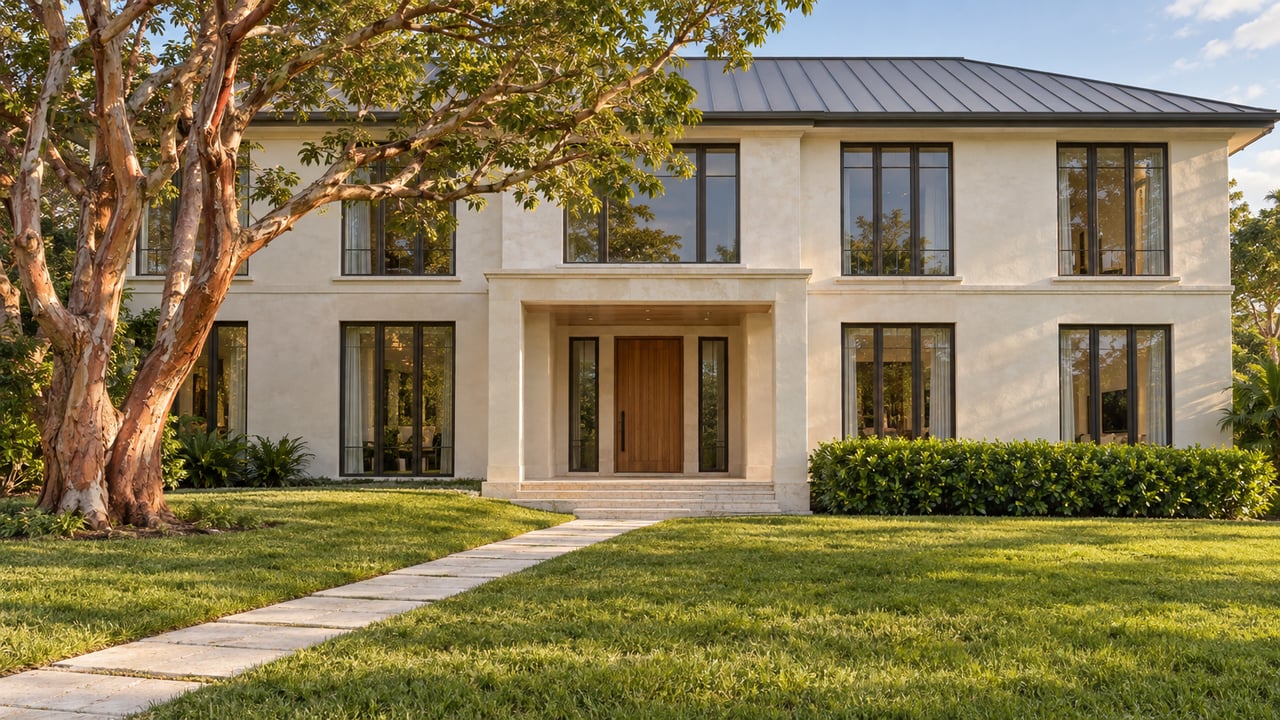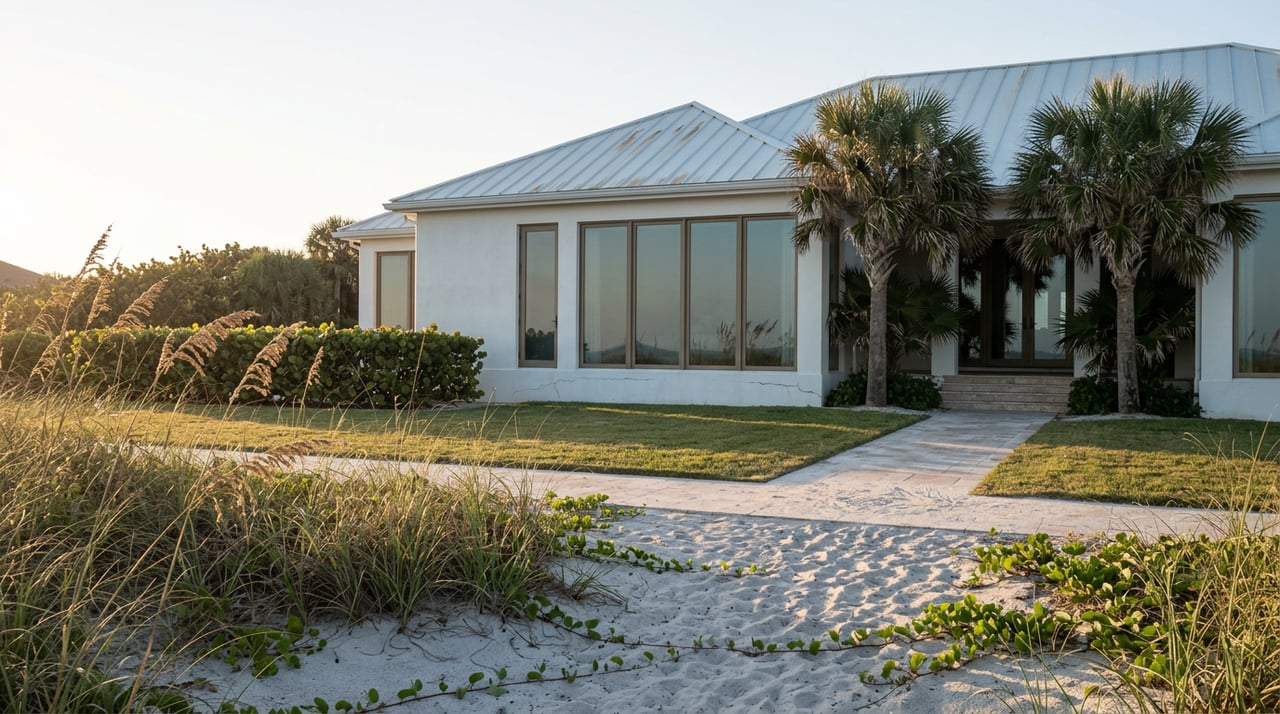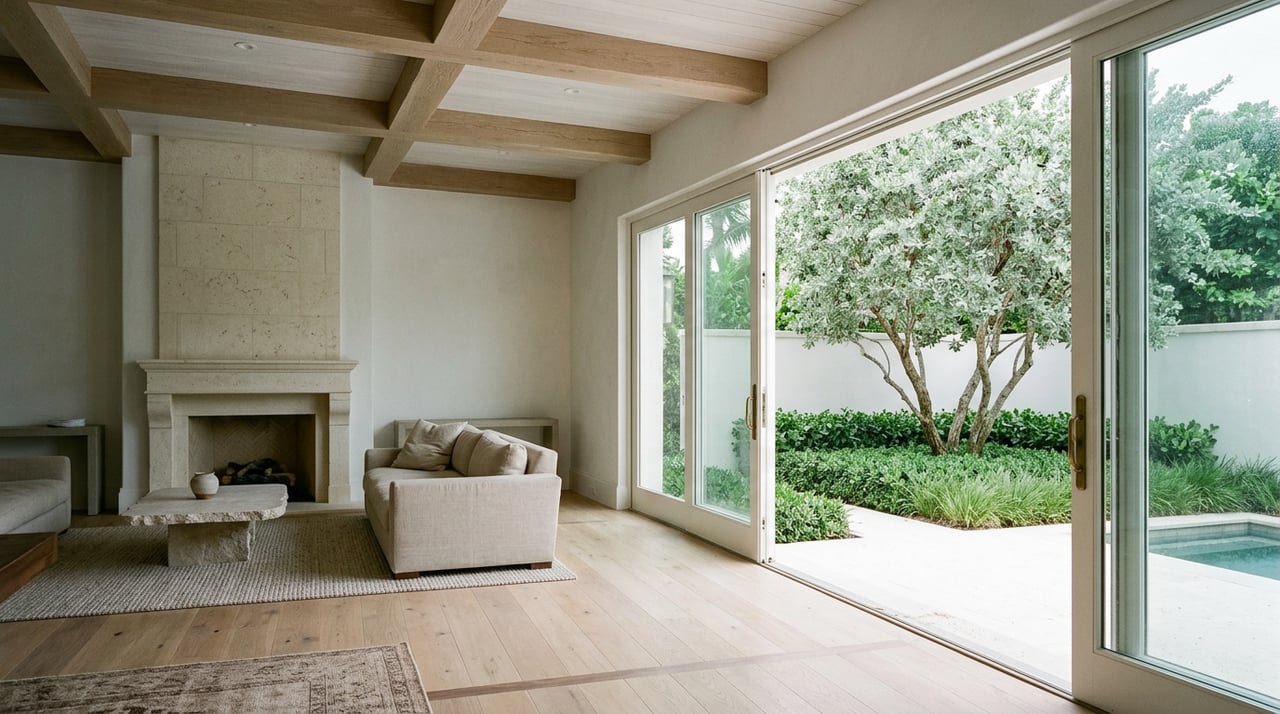
A buyer under contract on a Moorings property recently asked her closing attorney a question that catches almost everyone off guard: does the beach access come with the house? The answer, delivered somewhere between the survey and the title search, was no. Not automatically. Not ever, in fact, unless someone actively pays for it, keeps paying for it, and never lets a year slip.
That distinction sounds like a technicality until you understand what changed in April 2025.
The Assumption Almost Every Buyer Makes
Most coastal Naples neighborhoods handle beach access one of two familiar ways. Park Shore residents use a public beach park. Beachfront condo owners in Coquina Sands or along Gulf Shore Boulevard typically have access tied to the building itself. Buyers moving between these neighborhoods carry those mental models with them, and when they arrive in the Moorings, they assume something similar: a private amenity that transfers with the deed, the way a dock easement or a recorded ingress and egress right would.
It doesn't work that way here.
The Moorings Property Owners Association is a voluntary homeowners association, and membership in it, along with the right to use Moorings Beach Park at 2101 Gulf Shore Boulevard North, is a status you buy and renew as an individual, not a right attached to the parcel. A seller can own a home in the Moorings for twenty years and never have paid a dollar to the MPOA. Their listing can still say "private beach access available." Both things are true at once, and the gap between them is exactly where a buyer's expectations and the actual paperwork diverge.
What Changed in April 2025, and Why It Still Catches Buyers Off Guard
Until 2025, the MPOA operated with a grace period. A member could skip a year of dues without real consequence, and even after a longer lapse, there was a path back that didn't reset the clock entirely.
At its April 2025 meeting, the MPOA Board voted unanimously to eliminate that grace period. Under the current rule, any membership that has lapsed for a year must pay the New Member fee to rejoin, no exceptions and no partial credit for prior years of good standing.
That New Member fee, as of the 2026 renewal cycle, is $1,000, on top of the $200 annual dues that continue every year after. For a buyer purchasing a home from a seller whose membership lapsed even once during a slow selling season or a prolonged renovation, this means the beach access that looked "included" during showings actually requires writing a four-figure check before the first walk to the sand.
This is not a hypothetical seasonal fluctuation. It is a policy the Board deliberately tightened, and it applies retroactively to anyone whose membership history has a gap in it, regardless of how long ago that gap occurred or how established the household is otherwise. A buyer who assumes beach access simply resumes under new ownership is working from an outdated model of how the association actually functions.
The Title Structure Question a Good Closing Attorney Will Ask
Here is a detail that rarely comes up until someone is filling out the MPOA membership form after closing: the number of vehicle decals a membership carries depends on how the property is titled.
A single-family ownership, held individually, is entitled to three decals. A property held in an LLC or a trust, structures many affluent buyers use for estate planning or privacy, is entitled to two. For a couple who splits time between the Moorings and another home, and who each drive separately to the beach park with visiting family in a third vehicle, that difference is not trivial.
It is worth raising with your attorney before the closing, not after, because the decision about how to hold title is typically made well in advance of the deed transfer. Once the entity is set, changing it to gain a third decal is its own process, not a quick fix at the beach park attendant's booth.
What This Means If the Moorings Is Part of an Investment Plan
A meaningful share of buyers in this price range are not planning to occupy the home year round. Some are building a rental portfolio. Others expect to use the property personally for part of the year and lease it out for the rest.
The MPOA's rental structure has several mechanics that reshape the economics of that plan. Only one property per owner can carry a general membership, so a second Moorings property is treated as investment or rental property from the start, not as a second home entitled to the same beach privileges. Each lease requires a $500 lease fee, leases must run at least 90 days, and an owner is capped at three leases per calendar year. During any rental period, the owner relinquishes the right to use the beach park themselves.
That last point deserves attention from anyone marketing a Moorings rental around beach access as a selling feature. The owner cannot use the amenity while a tenant occupies the home, and the tenant's access depends on the owner completing rental registration paperwork with the MPOA in advance, including presenting a copy of the lease agreement. This is not a beach pass that simply comes with the keys. It is a status that has to be actively assigned, tracked by property address, and re-purchased for every qualifying lease.
For an investor modeling rental income against carrying costs, the $500 per lease and the 90-day minimum term are real inputs, not footnotes. A short-term rental strategy built around frequent turnover simply does not fit this framework.
Why the Board Tightened the Rules in the First Place
The stricter posture on lapsed memberships makes more sense once you understand what the Beach Park has been through.
Hurricane Ian came ashore in Naples in September 2022 as a Category 4 storm, and the surge devastated the Moorings Beach Park along with much of the surrounding coastline. Tables, benches, landscaping, the clusia hedge, showers, signage, stone walls, power, and irrigation all sustained damage ranging from significant to total loss. Members contributed $178,000 in donations to help fund the recovery, and the MPOA used a combination of reserve funds and that generosity to move quickly, first stabilizing the park for safe access, then rebuilding it in phases. Restoration was complete by the summer of 2024, including a renovated Mobility Porch, expanded seating, and new pathways.
An association that just spent two years rebuilding a shared amenity from storm damage, largely on the strength of its own members' dues and donations, has an obvious incentive to tighten who gets to lapse in and out of paying for it. The elimination of the grace period reads less like bureaucratic tightening and more like a board protecting a reserve fund it had to rebuild the hard way.
Before You Sign: What to Verify
- Ask the seller directly whether their MPOA membership is current, and if not, how long it has lapsed.
- Confirm with the MPOA whether the specific parcel qualifies as a primary residence for general membership purposes, or whether it would be treated as an investment property.
- Decide how you plan to hold title before closing, and understand the resulting decal allocation.
- If a rental strategy is part of your plan, model the $500 per-lease fee, the 90-day minimum term, and the three-lease annual cap into your return projections.
- Budget for the $1,000 new-member fee separately from your closing costs if the membership will need to be reestablished rather than simply renewed.
None of this shows up on a standard listing sheet, and much of it is easy to miss if the beach park is mentioned only in passing during a showing.
Frequently Asked Questions
Does Moorings Beach Park access transfer automatically when a home sells? No. Membership is voluntary and tied to the individual owner, not the deed. A new owner must apply and pay the applicable fees regardless of the previous owner's status.
How much does it cost to join for the first time? As of the 2026 renewal cycle, new members pay a one-time $1,000 fee plus $200 in annual dues, which continue every year afterward.
What if I buy a home where the previous owner had a current membership? Membership does not carry over with the sale. The new owner applies as a new member and pays the applicable new member fee.
Can I use the beach park while my property is rented out? No. Owners relinquish their beach park access rights during the term of any rental lease, regardless of who resides in the home.
Beach access in the Moorings is one of those details that photographs beautifully and reads simply on paper, right up until the moment a closing attorney asks who has actually been paying the dues. Getting that answer before you sign, not after, is the difference between an amenity you enjoy on day one and one you are still sorting out in the fall.
If you are evaluating a purchase in the Moorings, or anywhere along the Naples waterfront, Andrew Christopher can walk through the membership history, title structure, and rental mechanics specific to the property you are considering before you are under contract, not after.