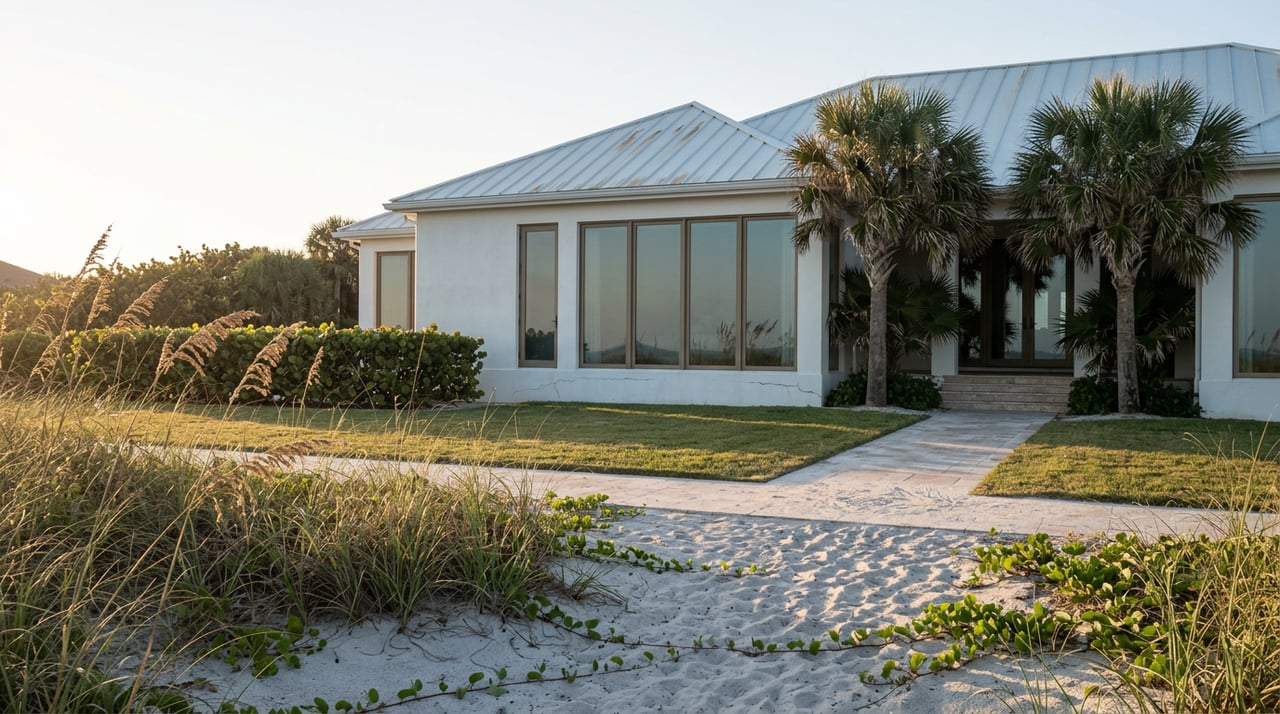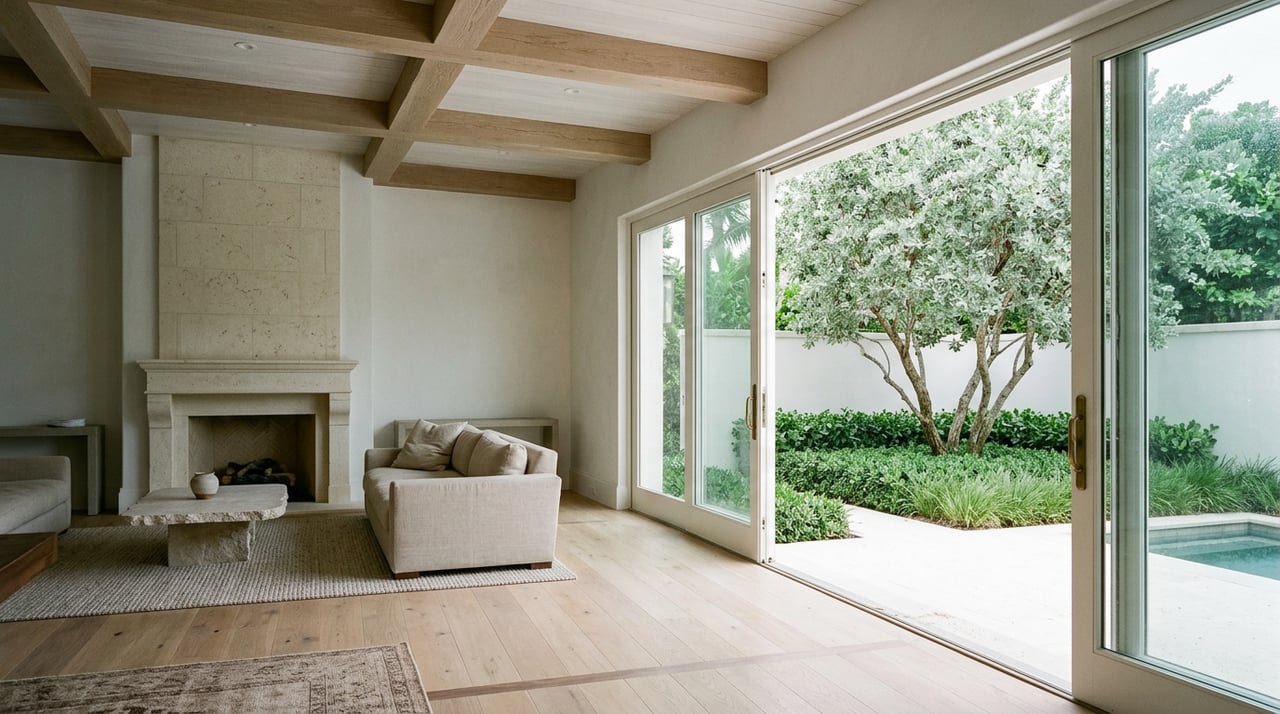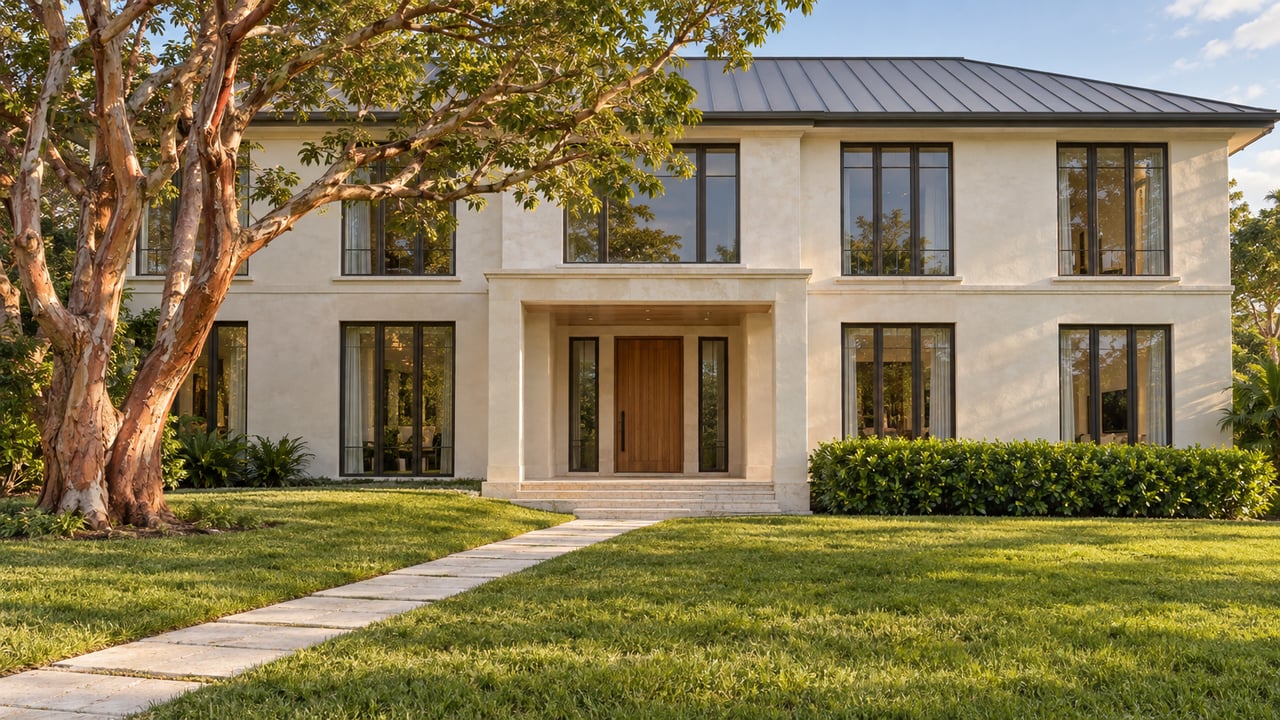
In June, a Gulf-front residence at 26 Second Avenue South closed for $27 million, the highest price paid for an existing home in Old Naples so far in 2026. The house earns the number. Built in 2025 by D. Garrett Construction to a Humphrey-Rosal Architects design, it sits on a half-acre with 120 feet of direct Gulf frontage, a rooftop deck over 5,000 square feet, a private elevator, and garage space for six or more cars. By any normal measure it was the transaction of the year.
Except it wasn't. Earlier in 2026, a Gulf-front lot in Old Naples changed hands for more money than that finished, decorator-ready estate. No house. No architect. No rooftop deck. Just a triple parcel of sand and setback lines, and a buyer willing to pay a premium for it anyway.
That single fact says more about the Old Naples market right now than any median price chart, and it's the reason the headline statistic everyone quotes this year is measuring the wrong thing.
The Number Everyone Quotes
Run the twelve months ending March 2026 through Southwest Florida MLS data and you get a story that sounds like a cooling market. The average single-family sale price in Old Naples for homes priced at $1 million and above slipped 9.7 percent year over year, landing at $6.49 million. Price per square foot fell even harder: down 28.4 percent, to $1,743.
Read those two numbers on their own and the conclusion writes itself. Old Naples softened. Sellers are getting less. Buyers have leverage.
Now look at what sits next to them.
The Number Nobody Reads Next To It
Active single-family inventory over $1 million dropped 34.6 percent year over year, down to just 70 homes in March 2026, a sharp retreat from the 111 listings that had piled up during the glut of February 2025. Months of supply fell from more than 36 months at that early-2025 peak to 13.8 months by March, landing at the tight edge of what's typically considered a healthy 12-to-24-month range for this price tier. Pending contracts rose 59 percent year over year to 62. Closed sales jumped 60.5 percent to 61.
Prices per square foot falling nearly 30 percent while contracts surge 59 percent and inventory shrinks by a third is not what a cooling market looks like. It's what a market looks like when the thing being measured has quietly changed.
Same Zip Code, Two Different Markets
Condos in the same twelve-month window tell a more conventional story. Sales fell 27.6 percent. Price per square foot dropped 11.2 percent, to $1,035. Active inventory sat at 64 units, down 21 percent year over year, but months of supply held at 18.3, roughly a third looser than the single-family side.
That gap matters. A condo unit is a fixed structure. You can't tear one down and rebuild it independent of the building around it, so its price tracks fairly normal supply and demand. A single-family lot in Old Naples is a different asset entirely, and 2026's numbers are the clearest evidence yet of how differently that asset now trades.
Why the Lot Outbid the House
Old Naples runs roughly from 14th Avenue South up to Banyan Boulevard, bounded by the Gulf to the west and Naples Bay to the east, with Aqualane Shores picking up at its southern edge. Inside that grid are the trophy streets, Gordon Drive, Gulf Shore Boulevard South, Broad Avenue South, along with the older Lake Drive cottages and the walkable core around Fifth Avenue South, Third Street South, and Cambier Park. It's a small, largely built-out footprint, which is exactly why land inside it behaves less like real estate and more like a scarce commodity.
Along Gulf Shore Boulevard specifically, the oldest housing stock in Naples sits alongside a steady churn of teardowns and rebuilds, a pattern that accelerated starting around 2013 and hasn't let up. When a buyer targets one of those lots, the existing structure on it, whether that's a 1960s cottage or a dated 1990s build, is often incidental to the purchase. The buyer is pricing the dirt: the frontage, the setback, the proximity to the beach or the bay. The house is a placeholder they intend to remove.
That's the mechanism behind the paradox. When a disproportionate share of a year's closings are land-dominant, meaning the buyer's real economics are about the lot and the structure adds little or nothing to what they're willing to pay, the reported price per square foot on those sales comes in low, sometimes dramatically low, because the "square footage" being measured belongs to a building the new owner has no intention of keeping. Average that against a smaller pool of finished, fully renovated trophy homes and the blended number falls even as the actual competition for the underlying land intensifies. Buyers aren't backing off. They're bidding hard on fewer available lots, and the accounting artifact of that behavior is a price-per-square-foot figure that looks like weakness.
The vacant triple lot that outsold the $27 million estate on 26 Second Avenue South is the cleanest possible illustration. One buyer paid top dollar for a finished, architect-designed, builder-warrantied home. Another buyer paid more for nothing but the land beneath a comparable address. Both transactions are real. Only one of them shows up cleanly in a price-per-square-foot calculation, because the other one has no house to measure.
What This Means at the Negotiating Table
If you're selling an older home on a well-positioned Old Naples lot, whether that's near Gordon Drive, along Broad Avenue South, or on one of the Lake Drive blocks, pricing it against recent price-per-square-foot comps will undervalue what you actually own. The relevant comparison isn't what similar-sized homes sold for. It's what the land itself is worth to a buyer who may never set foot in your current kitchen. A land-value assessment, not a structure-based one, is the number that should anchor your pricing conversation.
If you're buying a fully finished, move-in-ready home in Old Naples, the opposite caution applies. A blended price-per-square-foot average that's been dragged down by a wave of land-driven teardown sales can make a genuinely well-built, recently completed property look expensive by comparison, when in fact you're paying for something the market's headline number isn't designed to capture: a house you can actually live in without a demolition permit.
Timing differs by category too. With single-family months of supply compressed to 13.8, decisive buyers are moving on well-located lots quickly, and sellers holding land-eligible parcels have real leverage on timing. Condo buyers, with 18.3 months of supply and softer year-over-year pricing, have more room to negotiate and less pressure to act on the first showing.
Frequently Asked Questions
Does the 28.4 percent drop in price per square foot mean Old Naples home values are falling broadly? Not by itself. The figure reflects a shift in what's closing, with more land-dominant transactions in the mix, alongside genuine price softening on the finished-home side. Treating it as a flat valuation signal for every property type in the neighborhood would be a mistake.
Why did inventory drop so sharply if prices are described as softening? Because the two trends aren't contradictory once you separate structure value from land value. Buyers moved decisively on a shrinking pool of desirable lots and finished homes, pulling inventory down and months of supply to 13.8, even as the blended price-per-square-foot metric fell.
How do I know whether I'm looking at a land-value sale or a structure-value sale? Start with the age and condition of the existing home relative to its lot size and location. A dated or modest structure on a large, well-positioned parcel, particularly near Gordon Drive, Gulf Shore Boulevard South, or Broad Avenue South, is more likely to be priced on land economics than on finished square footage.
Reading an Old Naples listing correctly right now means asking whether you're pricing a house or pricing a piece of ground with a house temporarily standing on it. If you're weighing a purchase or a sale on one of these streets and want that distinction worked through property by property, Andrew Christopher can walk through the comparables with you before you commit to a number.